Illustration of a foggy Kentucky country road at night under a clouded moon, with a faint lantern glow in the distance

Northern Kentucky · Greater Cincinnati

The Haunted Driving Tour

Seven haunted stops, told in the witnesses' own words, in one deep Southern voice through your car speakers — starting at the cemetery before its gates close at six, then working south into the dark.

10 narration tracks ≈ 35 minutes of storytelling Researched October 18, 2026
See the route

How to run it in the car

Built for exactly the setup you described: phone in hand, stories through the car speakers, directions a tap away.

1

Connect the phone

Pair your phone to the car with Bluetooth, CarPlay, Android Auto, or an aux cord. Press play before you roll — the driver drives, the passenger runs the phone.

2

Follow the route

Every stop has a Directions button that opens the drive in Google Maps. Take the stops in order — the narration is written to hand you off from one stop to the next.

3

Play the story as you arrive

As you pull up to each stop, press its play button (or just let the full tour keep rolling). Each track is the story of the ground in front of you. On a forever pass, every track is also downloadable as an MP3 — yours to keep.

Get into ghost mode

Don't just listen to the stories — hunt for your own evidence at every stop. Two things, done at each stop, will put you right in the middle of it:

Take pictures at every stop

As you pull up, have the passenger snap a run of photos — the building, the road, the dark corners, out the windows. Shoot a few in a row, then a few more after the story ends. Don't check them in the moment; wait until you're home and go through them slow. Look for mists, pale shapes, lights, or faces where nobody was standing. Riders at Witch Hill have watched clear-night photos come back covered in white blotches — see what yours come back with.

Run a voice recorder

Open the voice recorder or Voice Memos app on the passenger's phone and let it run while the story plays and while you sit at the stop. Say the stop's name out loud, ask a question or two — “Who's here with us?” “Do you want us to leave?” — then leave long, quiet pauses for an answer. Play it back later at home, loud, with headphones. Voices that weren't in the car have a way of showing up on the playback, not in the moment.

Passenger's job, always — the driver drives. Photos and recording only where a stop allows it: stay in the car at the drive-through stops, and stay off private property, exactly as each stop card says. Caught something strange on a photo or a recording? Mention it in your review at the end of the tour.

The route at a glance

The road runs on a clock: it starts at Spring Grove Cemetery in Cincinnati — because the gates close at 6 PM — then works south and away, across the river into Kentucky, deeper into the night with every stop. Cincinnati → Covington → Erlanger → Latonia → Campbell County → Wilder, finishing at the most haunted honky-tonk in America.

The stops & their stories

Press play as you arrive at each one — and at every stop, stay in ghost mode: take your pictures and start your voice recorder before the story ends, so you're hunting while you listen. Every story is told straight — what's documented, what's legend, and where the two part ways — and this time the witnesses do a lot of the talking: caretakers, investigators, workmen, and one man on a scaffold in 1897, all in their own recorded words.

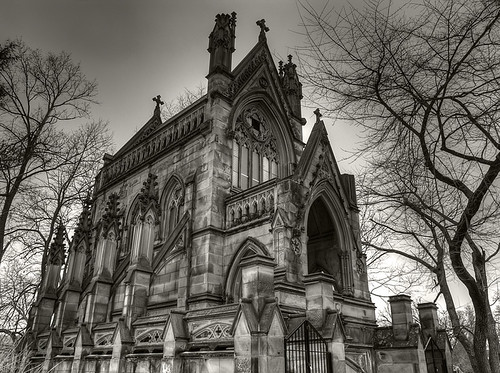
Black-and-white photograph of the Gothic Dexter Mausoleum at Spring Grove Cemetery
The Dexter Mausoleum at Spring Grove — photo by RPM-Photo via Flickr.
1STOP

Spring Grove Cemetery & Arboretum

4521 Spring Grove Ave, Cincinnati, OH 45232 · Founded 1845 · About 750 acres

Public · drive-through friendlyGates close at 6 PM — that's why the tour starts here35 miles of roads · allow time to linger

One of America's great garden cemeteries — a city of the dead holding presidents' families, Underground Railroad president Levi Coffin, generals, and beer barons — and not all of its residents rest quietly. In Lot 100, a memorial bust on a gravestone is said to turn its head and watch passersby. Nearby stands saloon keeper Charles Breuer, whose bronze bust wears glass eyes so lifelike one Cincinnati writer said they have "caused onlookers to gasp in creepy wonder" — and one century-old story claims Breuer asked for his own real eyes to be set into the bust. A visitor who stood at the grave wrote: "No matter where you stand near this grave, the eyes always appear to be staring directly at you." And down by the Gothic Dexter Mausoleum, visitors report pale dogs moving between the stones where no living dogs run loose.

Getting in — the GPS likes to turn you left at the traffic light and loop you down the side road. Don't take the bait: at the light, go straight about 30 yards, then turn left — the big front entrance is right there on Spring Grove Ave.
Directions Download MP3
Read the narration script
Stop one. Spring Grove Cemetery and Arboretum — forty-five twenty-one Spring Grove Avenue, Cincinnati. We start here for one practical reason: the gates close at six. Seven hundred and fifty acres, thirty-five miles of winding road, fifteen lakes — and every bit of it founded back in eighteen forty-five, before the Civil War. Presidents' families sleep here. Levi Coffin, the man they called the president of the Underground Railroad, sleeps here. Generals, beer barons, circus founders. Spring Grove isn't a graveyard so much as a city — a quiet, green, beautiful city of the dead. And like any city, it has residents the tour books whisper about. Drive slow, and find your way toward Lot one hundred. There's a gravestone there topped with a bust — and the story folks tell is that the bust turns its head. Turns it, and watches you walk past. People have sworn to it for generations: you pass it facing one way, you glance back, and it's facing another. Then there's Charles Breuer. Breuer was a Cincinnati saloon keeper who did well for himself, and when his time came, he had a bronze bust of himself set over his grave — with glass eyes. Not painted eyes. Glass ones, made so lifelike that one Cincinnati writer said they've "caused onlookers to gasp in creepy wonder." And here's the part that raises the hair: one story, repeated for over a century, claims Breuer asked that his own real eyes be taken out after death and set into that bust. Is it true? Nobody can prove it either way. But listen to a man who stood in front of that grave and wrote down what he felt: "No matter where you stand near this grave, the eyes always appear to be staring directly at you." He said they definitely look real. You can judge for yourself in a minute — walk around it. See if the gaze lets go of you. One more, down by the great Gothic Dexter Mausoleum — that's its photograph on your screen, all stone spires like a little cathedral. Visitors there report pale dogs. Dogs moving slow between the headstones at the edge of sight, white as bone, in a cemetery where no living dogs run loose. Present one moment. Gone the next. Spring Grove in the late light is the gentlest stop on this tour, and maybe the prettiest. Take your time. But keep one eye on the clock — when the gates close at six, we're expected. And glance back at Mr. Breuer as you leave, just to be sure he's still facing the way you left him. Next stop: a brick house on Steiner Avenue where the priests used to live — and where something, the witnesses say, never moved out.

Sources: Ever After in the Woods · Haunted Places — Spring Grove · Adventures in Cemetery Hopping — the Breuer bust · Soapbox Cincinnati — must-see stops · Spring Grove Cemetery

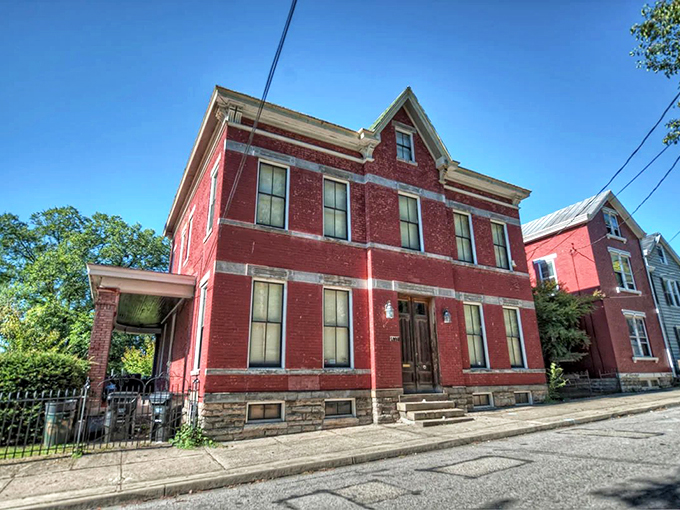
Photograph of the Sedamsville Rectory, a tall red-brick house with stone trim on Steiner Avenue, shown under a dark, spooky night filter
The Sedamsville Rectory itself, 639 Steiner Ave — photo via Family Destinations Guide, shown under a dark filter for the night drive.
2STOP

Sedamsville Rectory

639 Steiner Ave, Cincinnati, OH 45204 · Built 1891

Private property — exterior from the street onlyInterior only via organized ghost toursAs seen on Ghost Adventures

Built in 1891 for the priests of Our Lady of Perpetual Help, and featured on Ghost Adventures, Haunted Collector, and My Ghost Story. Its best-known ghost is Father Donald MacLeod, struck and killed by a train in the late 1800s and seen since — by parishioners and neighbors — near the building and the tracks. The witnesses pile up from there. Renovation workmen in 2011 reported eerie mists in empty rooms and shadows moving under the doors of rooms nobody was in. A Paranormal Inc. of Milwaukee team wrote down their own night inside: a shadow figure on the first floor, a voice or loud breath in the second-floor hallway, and an investigator named Missy who felt pressure on her legs "as though someone was trying to push them together." The wider catalogue: a rocking chair that rocks alone, a parlor piano playing single notes, children heard in the attic, dogs barking in an empty basement, a body-shaped hollow pressed into the master bed, and visitors leaving with scratches. In 2012 the Ghost Adventures crew brought a priest in to exorcise the house on camera.

Directions Download MP3
Read the narration script
Stop two. The Sedamsville Rectory — six thirty-nine Steiner Avenue, Cincinnati. That tall brick house in front of you was built in eighteen ninety-one, home for the priests of Our Lady of Perpetual Help. Six thousand square feet, four levels, on a quiet street in one of Cincinnati's oldest neighborhoods. It has been on Ghost Adventures, Haunted Collector, and My Ghost Story. And it is private property — so we do this one from the car, from the street, the right way. The stories will reach you fine from here. They've been reaching people for a hundred years. The oldest ghost belongs to Father Donald MacLeod — a priest, an author, a man of this parish. In the late eighteen hundreds, Father MacLeod was struck and killed by a train on the tracks near here. And almost from that day, people started seeing him. Parishioners. Neighbors. Folks walking this very street report a clergyman in dark robes, walking near the building, or down by the tracks where he died — still making his rounds, more than a century on. Investigators who've worked inside say they've watched that same robed silhouette cross from the living room into the parlor, like a man still keeping his house. Now listen to the people who've actually been inside, because their accounts are where this stop earns its reputation. When the Midwest Preservation Society began renovating the rectory in twenty eleven, the workers — plain workmen, not ghost hunters — reported eerie mists in empty rooms, and shadows moving under the doors of rooms nobody was in. A team from Paranormal Inc. of Milwaukee spent a night inside and wrote it all down: one investigator watched a shadow figure standing on the first floor by the living-room door. Another, up in the second-floor hallway, heard a voice — or a long, loud breath — right beside him, with nobody there. And an investigator named Missy, sitting in the master bedroom, said she felt pressure on the outsides of her legs, like someone was trying to push them together — and pressure in her chest, like the room itself was leaning on her. The catalogue of claims runs longer still: a rocking chair that rocks with nobody in it. A heavy old piano in the parlor that plays single notes in an empty house. Children heard talking and playing up in the attic. Dogs barking down in the basement, where no dogs are. A body-shaped hollow pressed into the master bed, as if someone invisible had just lain down. And darker marks on the record — people coming out with scratches, and a feeling of dread so thick that more than one visitor has described a weight pressing on their chest the moment they crossed the threshold. In twenty twelve, the Ghost Adventures crew brought in a priest and had the house exorcised on camera. Whatever you make of that — the house is still standing, still private, and still, by every account, occupied. And there are two more names on this street's ledger: a man, and at another time a child, both found dead on the pavement in front of this house. The child, they say, with a noose around its neck. Nobody ever explained either one to anybody's satisfaction. From the car, it's just an old brick rectory on a quiet street. Wish Father MacLeod a peaceful night... and let's cross the river into Kentucky, where the ground itself starts misbehaving.

Sources: Creepy Cincinnati · Paranormal Inc. of Milwaukee — investigators' personal experiences · Lodestra — a night inside the rectory · Coldwell Banker — Haunted Cincinnati

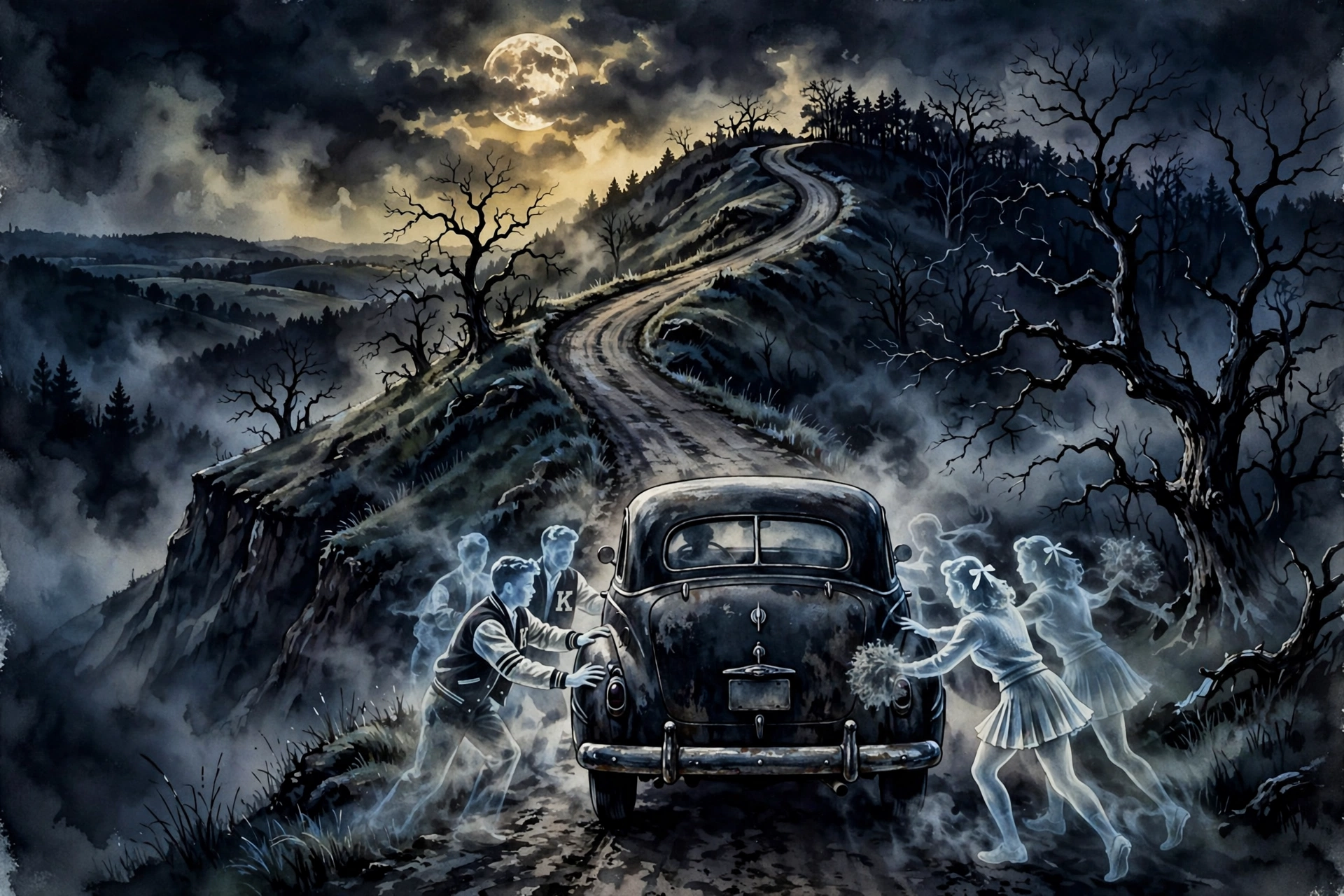
Artist's illustration of Paranormal Hill at night: a car facing uphill on a dark, foggy ridge road while ghostly 1940s football players and cheerleaders push it from behind
Artist's illustration — Paranormal Hill after dark: faced uphill, engine off, in neutral, and the class of the 1940s shoving the back of your car toward the edge.
3STOP

Paranormal Hill

Exact point: 1130 River Hill St, Covington, KY · Stop the car at 1179 Ridgeway Ct — where Panorama Point Rd meets Ridgeway Ct · On the ridge at the edge of Devou Park

Drive-through — stop at 1179 Ridgeway CtAt night, everybody stays in the car — no getting outThe ritual: face uphill, engine off, shift to neutralExact point: 1130 River Hill St

A gravity hill on the ridge at the edge of Devou Park — Paranormal Hill — and the narration tells the local legend: in the 1940s, a bus full of football players and cheerleaders, riding home after a big victory in the days before GPS and cell phones, got lost up in Devou Park — and the driver took it off an unfinished road. They never made it home. Now, upset and unruly, they push stopped cars up the hill toward the edge — they want to take everybody with them. The ritual runs in order: stop the car first at 1179 Ridgeway Ct, where Panorama Point Rd meets Ridgeway Ct — face it uphill, then turn the car off, put it in neutral, and feel who's got hold of the back of it. The scientists' answer — an optical illusion — gets its say too, and the track ends by leaving the verdict to the riders. The legend's proof, saved for a daylight run: baby powder dusted on the back of the car, and handprints in it afterward. By night this stays a drive-through stop: the car does the performing, and nobody gets out.

Straight talk — no published source ever named this hill's street; the coordinates that used to stand in for it came from Wikipedia's gravity-hill list, citing the Waymarking entry "Gravity Hill at Devou Park." That's settled now — the exact point is pinned: 1130 River Hill St, with the recommended stop at 1179 Ridgeway Ct, where Panorama Point Rd meets Ridgeway Ct. These are public roads — drive through respectfully, stay in the car after dark, and don't block the road. And the narration tells the local legend — the 1940s bus and the baby-powder handprints — recorded in this same voice. The bus story is told as what it is: local legend, not documented history.
Directions Download MP3
Read the narration script
Stop three. Paranormal Hill — up on the ridge where River Hill Street meets Ridgeway Court, above Covington, Kentucky, at the edge of DeVoo Park. Now, this one's different from the others tonight, so listen close. The roads up here are public roads — folks drive them day and night. But it's full dark by now, most likely, and out of respect for this place and everybody in it, we do this stop the drive-through way: nobody gets out of the car. The hill works just fine from the driver's seat — it's your car that's going to do the performing. This hill kept its address secret a long time — no book, no website ever named the street. That's over. The exact point is pinned now, and here it is plain: eleven-thirty River Hill Street, where it runs into Ridgeway Court. And the story I'm fixing to tell you is the local legend of this hill, passed down around here for years. The legend goes back to the nineteen forties. Picture a bus — a whole busload of young people: football players still in their letterman jackets, cheerleaders still in their uniforms, riding home in the dark after a big victory, headed back to their town, back to their school. Now, you have to understand the times. This was before GPS. Before cell phones. Back then, you either remembered the route... or you carried an atlas and prayed over it. And that night, somewhere up here in DeVoo Park, the driver lost his way. He turned up roads he didn't know, hunting for a way home — and in the dark, he drove that bus off the end of an unfinished road. Every soul on board came to their demise, right here on this ridge. Young. Victorious, an hour before. And gone. They say death didn't settle them. They say they're still up here — upset, unruly, a busload of kids who never made it home, and bitter about it. Bitter enough to want company. They want to take everybody with them. And that's what the ritual is for. Here's how it runs, exactly the way it's handed down. First, the stop: bring your car to a stop at eleven seventy-nine Ridgeway Court — right where Panorama Point Road comes down and meets Ridgeway. And turn it the right way: nose pointed uphill, the slope climbing away in front of you, up toward the edge. Stop there first, before anything can happen, and let the quiet settle around you. Then comes the moment. Turn your car off. ...Hear that? The engine gone, and the night rushing in to fill the space it leaves. Now put it in neutral. Foot off the brake... And feel them take hold. Your car rolls — not backward, not down the hill, the way it should. Forward. And up. Slow, steady, and wrong. Hands you cannot see have hold of the back of your car, and they're shoving — shoving it uphill, all the way toward the edge — and if the stories are true, they'd shove you clear off of it if you sat still long enough to let them. They don't shove out of kindness, friend. They shove because the edge is where they're taking you. And the old-timers will tell you there's a way to prove it. Here's the test they swear by. Before you make your run — on a daylight visit, when you can get out and look — dust baby powder across the back of your car: the trunk, the bumper, a good white coat of it. Then do the ritual. And when it's done, walk around back and look close. Handprints. Small ones, pressed into the powder where no living hand has touched your car. Folks have been finding them up here for years. So tonight, from the driver's seat, here's yours: stop at eleven seventy-nine, nose her uphill, kill the engine, find neutral, and feel who's shoving. Save the powder for daylight — and check your bumper before you wash the car. Now — the scientists have their say, and I'll give it to you straight, because this tour always does. They'll tell you it's an illusion: the lay of the land, the trees, the horizon, all conspiring to tilt your sense of up and down until a gentle downhill slope wears the disguise of a climb. Just gravity, doing ordinary work. Nothing on this ridge but your own two eyes lying to you. That's the explanation, and it's a good one — it's probably even true. But it ain't the only one you've heard tonight. And I've told you both sides the best I can — the rest ain't mine to call. So now — especially you kids in the back seat, yeah, I'm talking to you — now it's up to you to decide. Is it just science? Just gravity... ...or is it them?

Sources: Wikipedia — List of gravity hills · Explore Devou Park — Directions

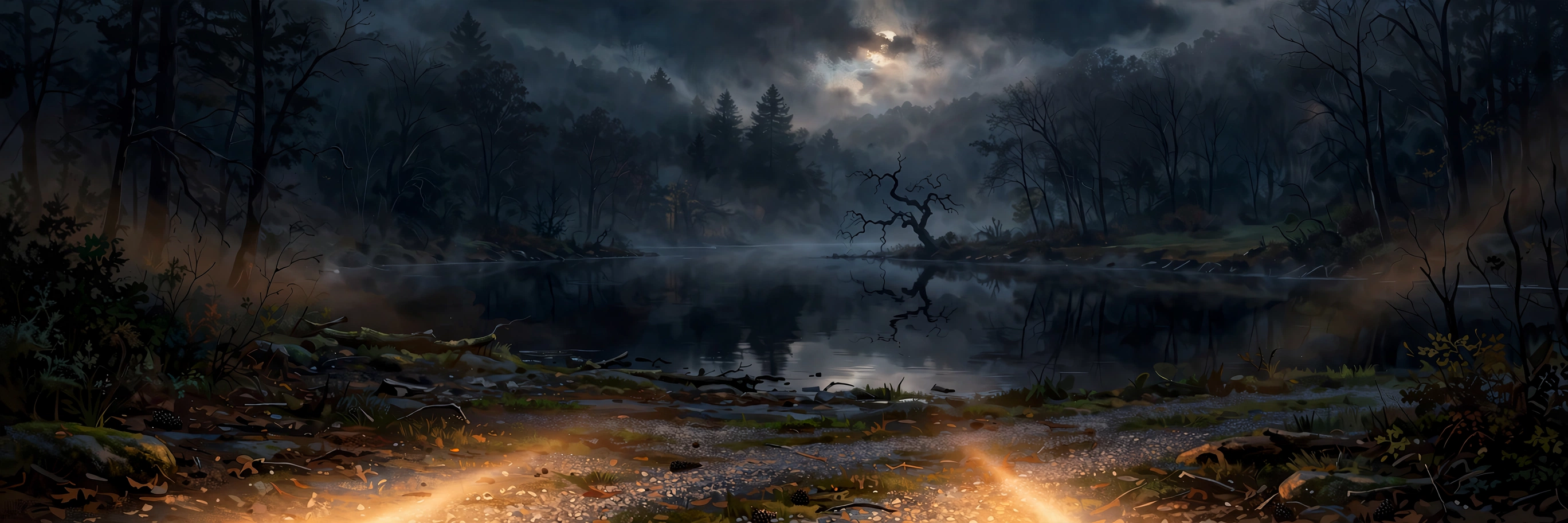
Artist's illustration of Prisoner's Lake at night: still black water under a clouded moon, a lone twisted tree standing on the far shore, and headlight glow washing over the gravel turnaround
Artist's illustration — Prisoner's Lake after dark: headlights on the turnaround, and the tree waiting on the far shore.
★BONUS

Prisoner's Lake — Bonus Stop

Prisoners Lake Dr, Devou Park, Covington, KY 41011 · The parking lot at the end of Prisoners Lake Dr, right in front of the lake · Just down the hill from Paranormal Hill

Bonus stop — not numbered, not one of the sevenDevou Park closes at 9 PM — this stop has to happen before thenStay in the car the entire timeThe ritual: back up facing the water, lights off, flash high beams three times

A little lake just down the hill from Paranormal Hill, with a dark past. A hundred years ago it wasn't a lake at all — it was a stone quarry, and starting in 1916 the city of Covington marched prisoners up here from the city jail to work it, breaking rock and crushing stone for the city streets. Some of those prisoners never came back down — they ran, and vanished into these hills. By 1924 the quarry had filled with water and the lake was born, and the stories started almost at once: they say this lake has no bottom, and in July of 1924 a woman was found murdered near this shore — police believed evidence had been thrown into the water, dragged the lake again and again, and never found a thing. And then there's the old tale — an old wives' tale, whispered around here longer than anybody can remember: back up in the turnaround until your headlights face the water, turn your lights all the way off, and flash them up to high beam three times. Do it right, they say, and you'll see a shadow figure on the other side of the lake. Some say it's hanging. Some say it's standing there... watching you.

Access — Devou Park closes at 9 PM, so this bonus stop has to happen before then — you're already up here for Paranormal Hill, so swing down to the lake on the same visit. Here's the way in: at the stop sign, turn right, go down the hill, then turn right again — the parking lot at the end of Prisoners Lake Drive sits right in front of the lake. Riders stay in the car the entire time: back up until your headlights face the water, do the ritual, and pull out nice and easy. Nobody gets out at this one; the headlights do the visiting.
Directions Download MP3
Read the narration script
Now, y'all are already up here in DeVoo Park, so I'm gonna give you a bonus. Just down the hill sits a little lake with a dark past — Prisoner's Lake. A hundred years ago, this wasn't a lake at all. It was a stone quarry. And in nineteen sixteen, the city of Covington started marching prisoners up here from the city jail to work that quarry — breaking rock, crushing stone for the city streets. Some of those prisoners never came back down. They ran. Vanished into these hills. By nineteen twenty-four, the quarry had filled with water, and the lake was born. But the stories started almost immediately. They say this lake has no bottom. In July of nineteen twenty-four, a woman was found murdered near this shore, and police believed evidence had been thrown into the water. They dragged this lake again and again — and never found a thing. Now there's an old tale about this lake — an old wives' tale, the kind that's been whispered around here for longer than anybody can remember. Pull into the turnaround up ahead and stay in your car. Back up slow until your headlights are facing the water. Then turn your lights all the way off... and flash 'em up to high beam. Three times. They say if you do it right, you'll see a shadow figure on the other side of the lake. Some say it's hanging. Some say it's standing there... watching you. Now I'm not saying you'll see anything. I'm just saying folks who've tried it swear they have. When you're ready, pull on out of there, nice and easy. And don't look back.
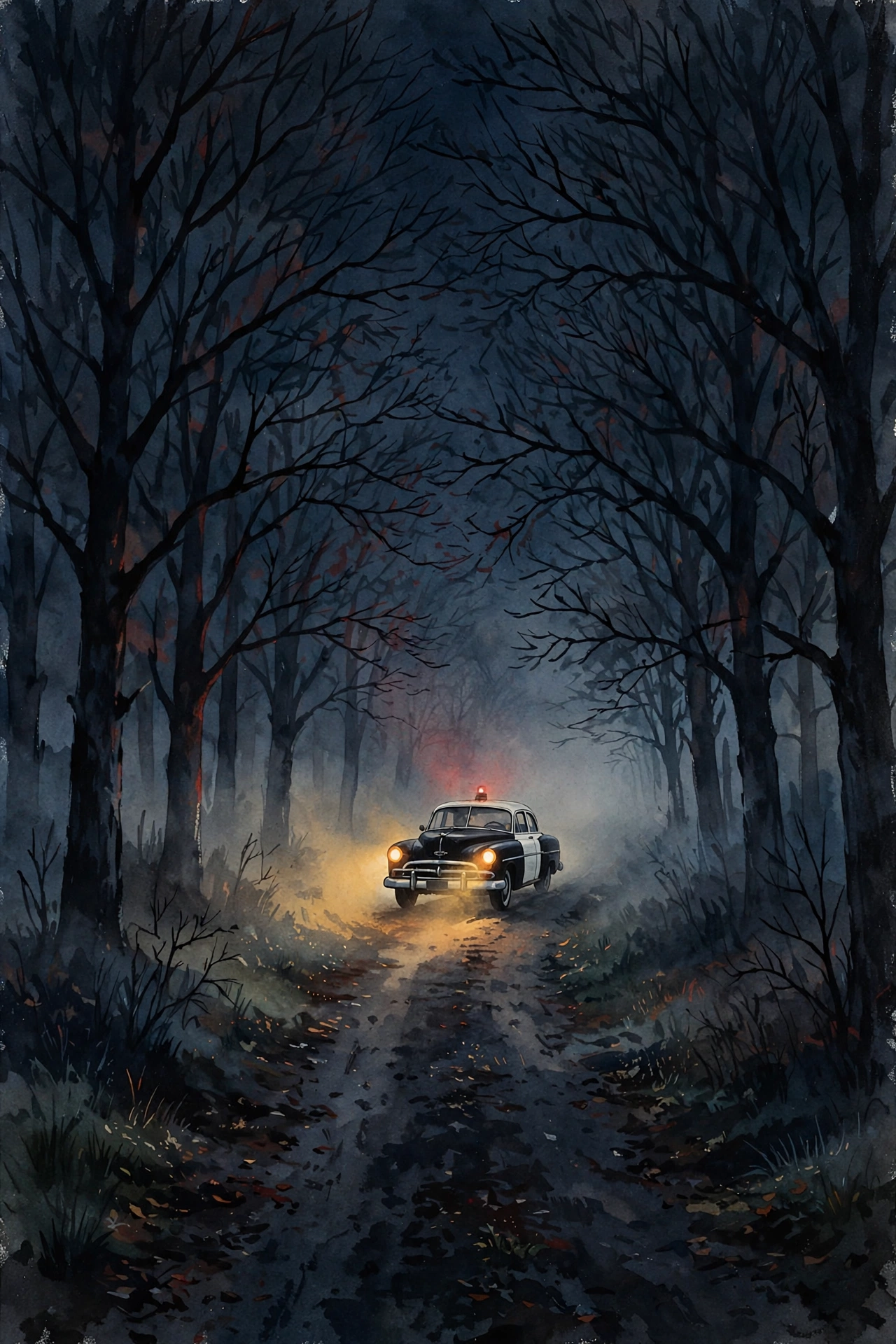
Illustration of a 1950s police car approaching through fog on a narrow dark road
Artist's illustration — the patrol car folks say still works Narrows Road.
4STOP

The Ghost Cop of Narrows Road

Narrows Road, Erlanger, Kenton County, KY · Real public road — drive-by friendly

Public road — drive it slowRanked #21 on a national "spookiest streets" surveyResidential road — be a good guest

Locals say a phantom police officer in a 1950s patrol car haunts Narrows Road and pulls living drivers over late at night: his light flashes behind you where no driveway lets out, you pull over and wait for him to come to your window — and he never does. Kentucky Haunted Houses, which collects these accounts road by road, puts it in plain words: "Stories say that he pulls you over late at night. Many believe the ghost is that of a cop who was hit by a car and killed here while making a traffic stop in the 1950s." The same account admits, "some reports say this story is just a rumor, and that a cop never even died here during that time period" — no record confirms an officer died here. Either way, Narrows Road ranked #21 in a survey of 3,000+ drivers listing America's 140 spookiest streets.

Straight talk — one source puts the phantom officer in Alexandria instead; two independent sources place him on Narrows Road in Erlanger, which is the better-supported location — and the one this tour drives. The "officer killed in the 1950s" backstory is unverified; the narration says so out loud, because riders trust a guide who levels with them.
Directions Download MP3
Read the narration script
Stop four. Narrows Road, Erlanger, Kentucky. This is a real, lived-on public road — folks out here are used to slow cars after dark, but be a good guest anyway. Keep it slow. Keep it respectful. And keep one eye on your mirror. Because the legend of Narrows Road comes up behind you. The people at Kentucky Haunted Houses, who collect these accounts road by road, put it this way — and I'll give it to you in their words: "This road is rumored to be haunted by a phantom police officer who drives a police car from the nineteen fifties. Stories say that he pulls you over late at night. Many believe the ghost is that of a cop who was hit by a car and killed here while making a traffic stop in the nineteen fifties." Here's how the drivers who've met him tell it. You're rolling down Narrows Road, minding your own business, when headlights bloom in the darkness behind you — where no driveway lets out, where no side road joins. And then he's behind you. An old patrol car. A nineteen-fifties cruiser, black and white, the kind with the single red bubble light on top. His light starts flashing. And like any law-abiding driver, you do what you've been trained your whole life to do: you pull over... and you wait for him to come to your window. He never does. No footsteps on the gravel. No knock on the glass. No flashlight beam. Just your own breathing, your hands on the wheel, and when you finally work up the nerve to look — an empty road behind you. No car. No officer. Nothing that was ever there at all... except him. Now the honest part, because this tour deals straight: nobody has ever found a record of a police officer dying on this road. The Kentucky Haunted Houses account itself admits, in its own words, "some reports say this story is just a rumor, and that a cop never even died here during that time period." One retelling even moves him over to Alexandria. Paper says rumor. But rumor hasn't slowed him down any. When a national survey asked more than three thousand drivers to name America's spookiest streets — a hundred and forty of them made the list — little Narrows Road, right here in Erlanger, came in at number twenty-one. Number twenty-one in the whole country. That's how many drivers, from all over, carry this road in their heads. So drive it slow tonight. And if lights rise up behind you where no lights should be... well. Pull over polite. Sit still. Hands where he can see them. He'd expect nothing less — he's still on duty, and as far as he's concerned, this is still his road. Next stop: Latonia, and a hole in a hill where a light walks that shouldn't walk anywhere.

Sources: 103 GBF — America's Scariest Roads, Kentucky · Haunted Places — Kenton Vale · Haunted Places — Terrace Park

Illustration of a single stone railroad tunnel beside a country road at night, a lantern glowing deep inside
Artist's illustration — the tunnel off Locust Pike, and the light locals say walks inside it.
5STOP

The Locust Pike Tunnel

Locust Pike (KY 1930), Latonia, KY 41015 · The rail tunnel between Covington and Latonia, on the old L&N Short Line

View from Locust Pike onlyWorking railroad corridor — never on the tracks, never in the tunnelAndrew's hometown pick — the local lantern story

The railroad cut between Covington and Latonia generations ago, through the hill on the old Louisville & Nashville Short Line — and its tunnel sits just off Locust Pike in Latonia. The local story told about it: a lantern light walks the tunnel — swinging low, the way a railroad man carries it — the ghost of a man said to have been killed on this line long ago, lantern in hand, still trying to walk out of the dark. Sometimes the light stops. Sometimes, folks swear, it comes toward you.

Safety, non-negotiable — this is a living railroad corridor and the tunnel is railroad property. Watch from Locust Pike, from public ground only. Never walk the tracks and never enter the tunnel.
Straight talk — this is the tour operator's own hometown pick, and it's presented that way on purpose: published ghost-lore research turned up no printed legend for this tunnel — the lantern story here is living local lore, the kind passed driver to driver rather than written down. The documented, in-print lantern legends the research did find are listed below, so riders always know which kind of story they're hearing.

The published lantern legend: Lambs Ferry Twin Tunnels

Lambs Ferry Road, Ryland, KY (Madison County) — about 1½–2 hours south

Twin L&N tunnels from the late 1850s, still active CSX track. The in-print version of this tour's lantern story lives here: a man killed in the 1930s walks the tunnel toward the exit — "sometimes he carries a lantern, other times not." View from the public road only; the source itself warns never to trespass. Open in maps

Also researched: Allendale & Moonville

Allendale Tunnel, Elsmere, KY · Moonville Tunnel, Vinton County, OH

Allendale is the only other haunted tunnel found inside Northern Kentucky — a hanging legend, no lantern. Moonville, 3+ hours away in Ohio, holds the region's most famous lantern ghosts: the Brakeman and Engineer Theodore Lawhead. Either could anchor a future route; neither bumped the hometown pick.

Directions Download MP3
Read the narration script
Stop five. The tunnel on Locust Pike — Latonia, Kentucky. Every tour has one stop the books don't know about. This is ours. The railroad cut its way between Covington and Latonia generations ago, straight through the hill, on the old Louisville and Nashville Short Line — and the tunnel it left behind sits just off Locust Pike, right here in the four one zero one five. Ask the printed ghost books about it and they'll shrug: the lantern legends they bothered to write down live further south. But ask around Latonia, and the story's right here at home. They say a light walks that tunnel. A lantern — swinging low, the way a railroad man carries it — moving through the dark of the bore, where no living man should be, on a line that still carries trains. The telling goes that a man was killed on this line long ago, lantern in hand, and never made it out of the tunnel he was walking. So he walks it still. Sometimes the light stops. Sometimes, folks swear, it starts coming toward you. Now, is that written down anywhere official? No — and I won't pretend otherwise. This is living local lore, the kind passed driver to driver, porch to porch. But I can tell you it's the same story railroad country tells all down this line. The best-documented version sits about two hours south, at the twin tunnels on Lambs Ferry Road in Ryland, where a photographer named Jim Pearson wrote down the legend the locals tell there — a man hit and killed in the nineteen thirties, who "reportedly can be seen walking through the tunnel, seemingly trying to reach the exit. Sometimes he carries a lantern," Pearson wrote, "other times not." And up in Ohio, at the Moonville tunnel, the lantern men have names: a brakeman, killed by a train while swinging his lantern, seen carrying it still; and Engineer Theodore Lawhead, who died in a collision in the eighteen eighties and walks the tracks with his light. Different tunnels. Different counties. Same lantern, swinging low in the dark. Whatever walks these railroad cuts, it walks all of them. Now the rules, and they matter here as much as anywhere on this tour: this is a living railroad corridor, and the tunnel is railroad property. You watch from Locust Pike, from public ground. Never on the tracks. Never in the tunnel. The dead can keep the inside — the outside is ours. Roll down off the pike and sit a minute as the dark settles. Watch the tunnel mouth. If the light's walking tonight... you'll see it. Next stop: a fork in the road near Alexandria, where three women were hanged from a tree — and where the road itself still keeps their graves.

About this stop: the Locust Pike tunnel and its lantern story are the tour operator's local knowledge — no published source for the legend was found. Researched alternatives: Jim Pearson Photography — Lambs Ferry tunnels · Haunted Places — Allendale Tunnel · Wikipedia — Moonville, Ohio

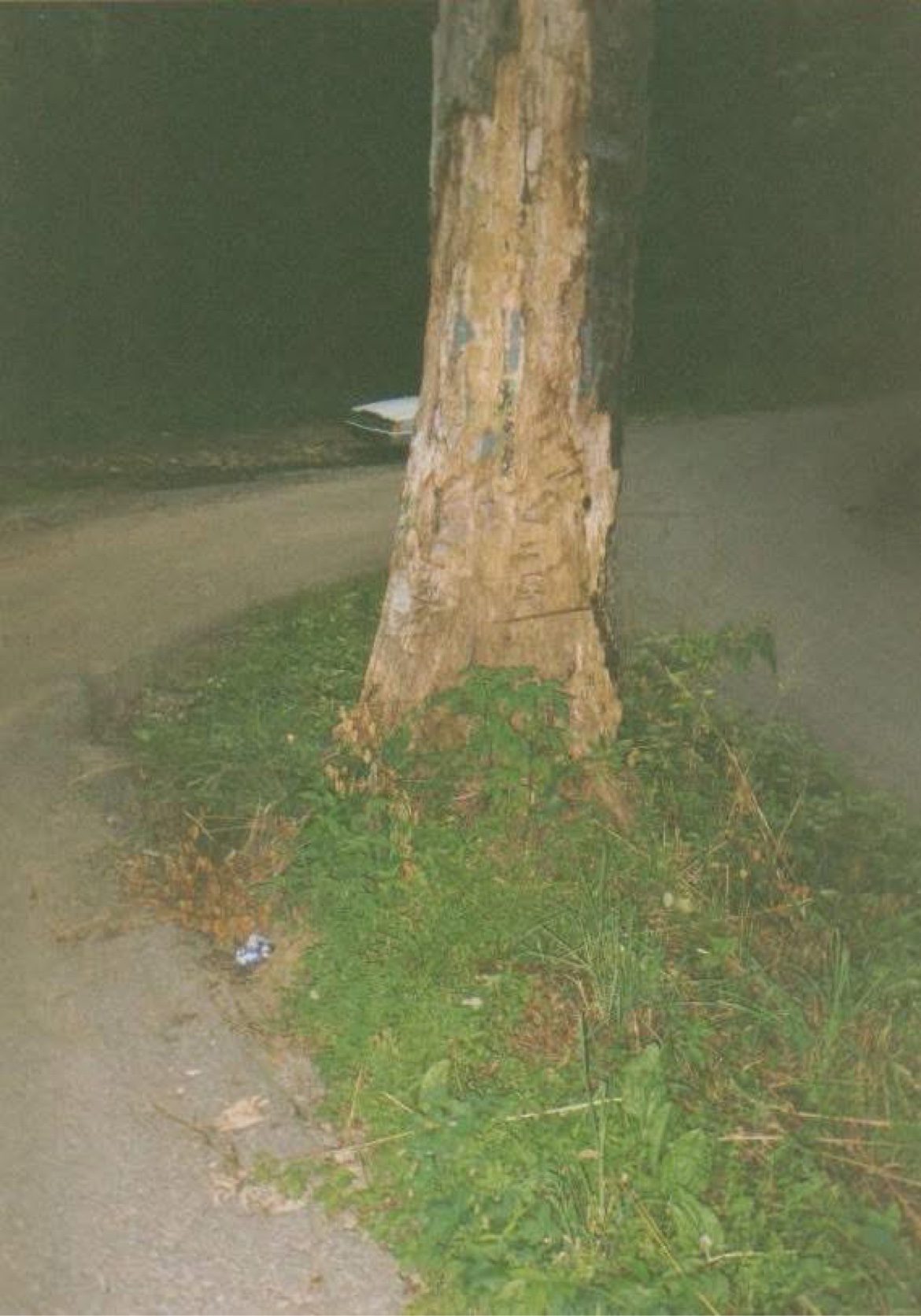
Photograph of the real Witches Tree at night: its scarred, bark-stripped trunk standing in the fork of the road, ax marks visible low on the trunk
The real Witches Tree, photographed at night while it still stood — ax marks scar the trunk where people tried to cut it down. Photo found on Google; not the operator's own picture.
6STOP

Witch Hill · The Witches Tree

Rifle Range Rd, near Alexandria, Campbell County, KY · A drive-through stop — the road tells the story in order

Drive-through — stay on Rifle Range RdRuns in order: start → three humps → the tree at the splitThe tree was cut down around 2004No marker — the road itself is the landmark

This stop is a drive, not a destination. It starts on Rifle Range Road, a narrow, tree-tunneled country road near Alexandria, and the road tells the story in order. First come three low, evenly spaced humps in the pavement — a visitor who submitted his account to the Shadowlands index named them plain: "These are the graves of the witches." Then, at the end of the run, the road splits around the ground where a great tree once stood — the tree from which local legend holds three witches were hanged, and which carried a curse on anyone who tried to cut it down, or even spat on it. The same witness wrote of his many visits: "I have been to this place many times, and taken pictures, and many times even though it was a clear night, the pictures have come back covered in white blotches," adding, "You will find many out of the ordinary happenings on the way out to the tree." After the tree was cut down (~2004) and reportedly moved to a church parking lot at the top of the road, the humps and the split remained — and locals reportedly still tread carefully near the site.

1
Start — Rifle Range Rd

Pick up Rifle Range Road near Alexandria and roll slow. From here, the story plays out in order.

2
The three humps

Three low, even rises in the pavement, one after another — said to be the witches' graves. Count them as you cross: one, two, three.

3
The tree at the split

The road forks around the ground where the Witches Tree stood. That's the end of the run — and the heart of the legend.

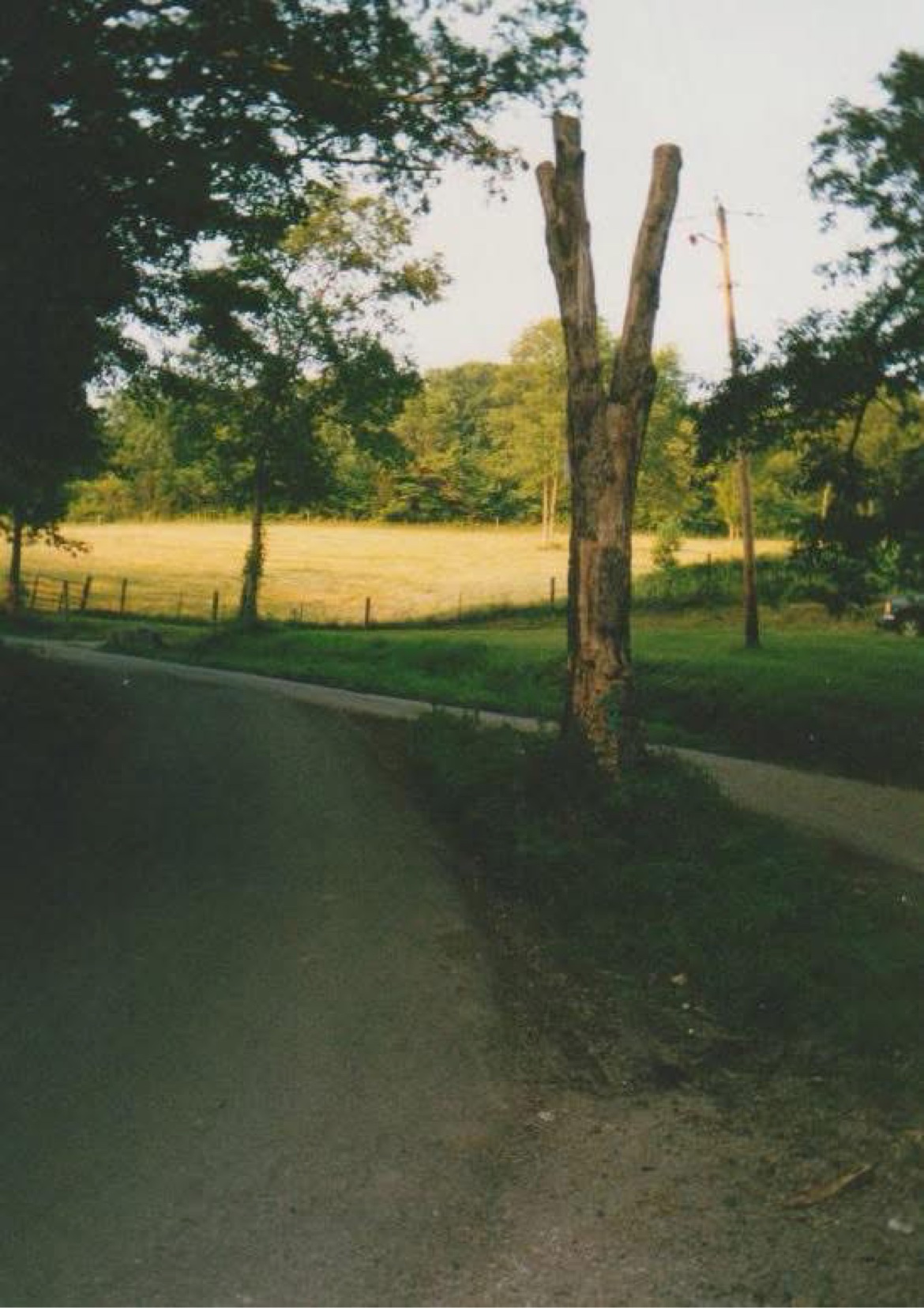
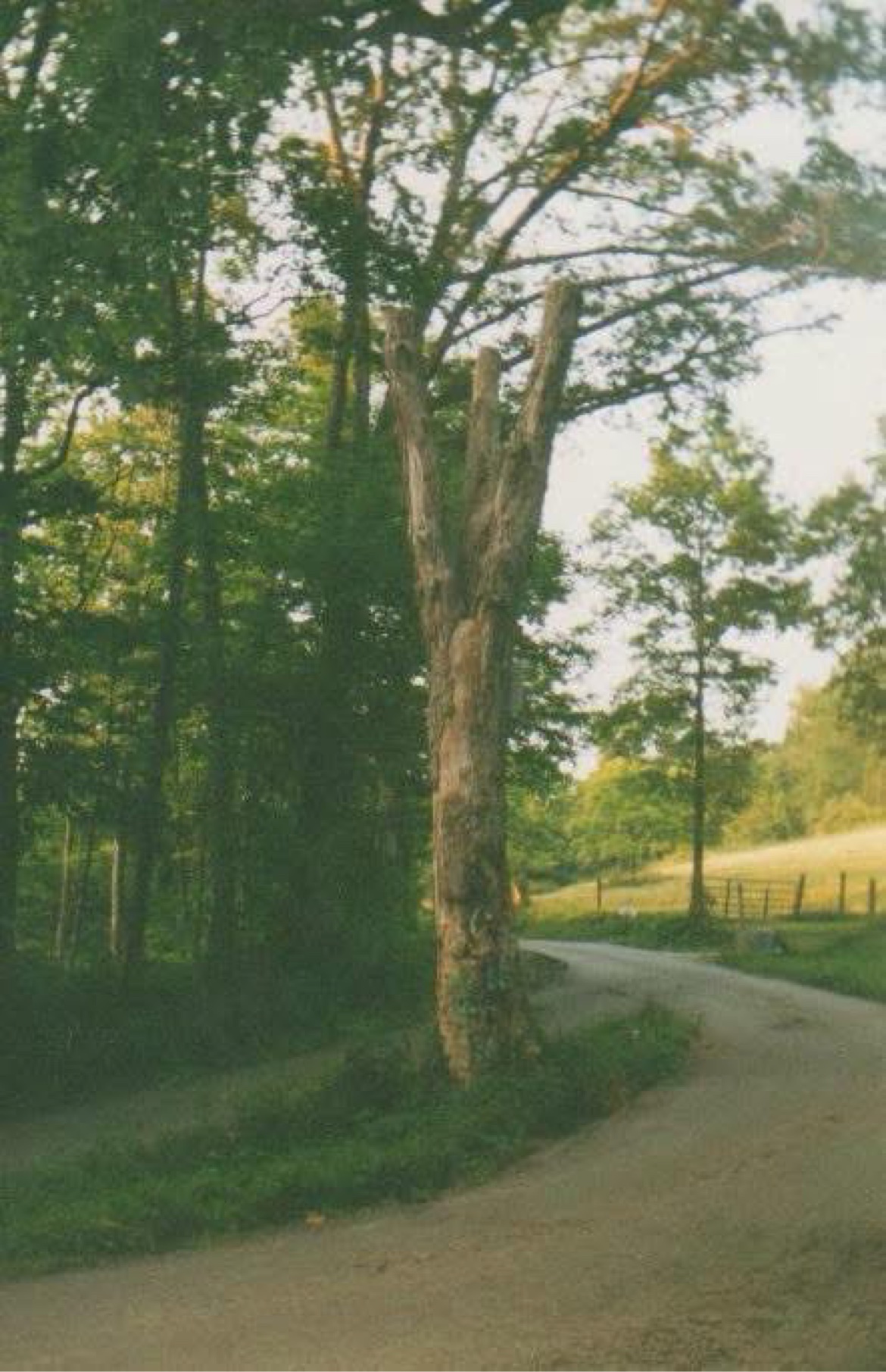
Actual photographs of the real Witches Tree, found on Google — not the operator's own pictures. The tree was cut down around 2004, but it was photographed plenty while it stood: in the fork of the road by day, and close up at night, ax marks and all.

Daylight photograph of the dead Witches Tree standing in the fork of the road, its two bare prongs rising above the split
The tree in the fork, by day — the road splitting around it.
Daylight photograph of the full Witches Tree at the road split, green woods behind it and the country road curving past
The whole tree at the split, before it came down around 2004.
Straight talk — for years no published source named the exact road; the accounts only said "near Alexandria," with one saying Wilder. The operator has now pinned it himself: the drive runs on Rifle Range Road, in his order — start on Rifle Range Rd, cross the three humps, and finish at the tree where the road splits. The exact starting address on the road is still being confirmed with him, so the Directions button points you at Rifle Range Rd itself. And with the tree gone since about 2004, this stays what it always was: a story you drive through, not a landmark you pose beside.
Directions Download MP3
Read the narration script
Stop six. Witch Hill — Rifle Range Road, near Alexandria, in Campbell County. Most of tonight's stops, you arrive at. This one, you drive. Witch Hill isn't a place you park — it's a stretch of road that tells its story in order, so keep rolling, nice and slow, and let it play out under your wheels. It starts on Rifle Range Road. A narrow country road, trees crowding in close from both sides — the kind of road that feels like it's been waiting for you. From here, the road gives you its signs one at a time. First: the humps. Three of them. Low, even rises in the pavement, spaced out regular as a heartbeat, right before the bend. Count them as they pass underneath you. One... two... three. I don't have to guess what they are. A man who came out here again and again wrote it down for the Shadowlands haunted places index, and his words are plain: "There are three evenly spaced humps right before the bend the tree was on. These are the graves of the witches." Three humps. Three women. Roll over them slow — give them that respect. And then the road delivers you to the final spot. The road splits. Forks clean in two around a patch of ground in the middle of it... and that ground is where the tree stood. A great tree once grew right there, in the middle of this road — grew so big the road itself had to split around it. And from that tree, the legend says, three witches were hanged. From that day, the tree and the ground under it carried a curse: misfortune on anyone who tried to cut it down... or even spat on it. For generations the trunk stood in that very fork — bark stripped pale, the road dividing around it. And the pictures on your screen are the genuine article: actual photographs of that very tree, taken while it still stood. We found them on Google — nobody on this tour shot them, and I won't pretend otherwise — but that is the real tree, in the real fork of this road. Look close at the night photograph: down low on the trunk you can see the ax marks, plain as scars, where people tried to cut it down long before anyone finally managed it. The tree itself has been gone since about two thousand four — but there it stands in those pictures, exactly where you're sitting now. But don't take my word for what this place does to people. Take the same witness, in his own words: "I have been to this place many times, and taken pictures, and many times even though it was a clear night, the pictures have come back covered in white blotches." Clear nights. Clean camera. And photograph after photograph blooming white, like something was standing between him and the dark. He added one more thing: "You will find many out of the ordinary happenings on the way out to the tree." Not at the tree, friend. On the way out to it — which is exactly the stretch of road you just drove. Then, around two thousand four, somebody finally did the thing the curse had warned against for a hundred years. They cut the tree down. The same witness file carries the update: it "has recently been cut down and moved to the church parking lot at the top of the road." A church parking lot. Sit with that a second. But here's the thing: they could haul the tree away. They couldn't pave over the story. The humps are still in the roadbed. The split is still in the road. A writer for a Kentucky trail guide stood on this same ground years later and put it as plain as it can be put: "In Alexandria, near a quiet fork in the road, the ground humps gently where an old tree once stood." And locals, the accounts say, still tread carefully around this bend after dark — still lower their voices, still don't spit, still don't say the word "witch" any louder than they have to. So that's your drive, the way it has always run: Rifle Range Road... three humps... and the tree at the split. You just drove the whole legend, start to finish, without ever leaving your seat. Roll on when you're ready. One stop left — and we've saved the biggest for last. Next: Wilder, Kentucky, and a honky-tonk they called a gateway to hell.

Sources: Shadowlands Haunted Places Index — Kentucky · United States Ghost Towns · DailyWise

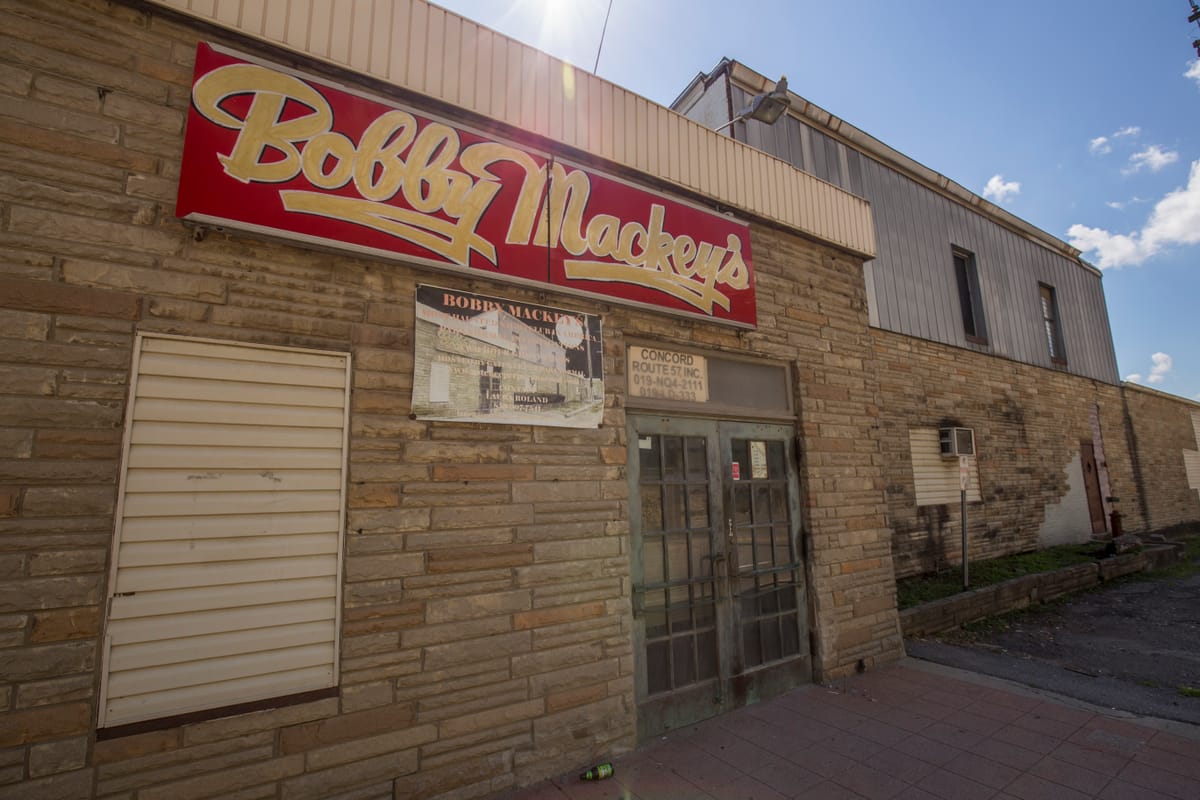
Photograph of Bobby Mackey's Music World in Wilder, Kentucky, before its demolition
Bobby Mackey's as it stood before demolition — photo via HauntedUS.
7STOP

Bobby Mackey's Music World

44 Licking Pike, Wilder, KY 41071 · Temporary home: 8405 US Highway 42, Florence, KY

Drive-by · site onlyOriginal building demolished Dec 10, 2024Rebuild planned on this siteStays in the lineup — as a drive-by storytelling stop

Promoted as "the most haunted nightclub in America" and called by locals a "gateway to hell," the club stood on land that began as an 1850s slaughterhouse and later a string of roadhouses (Blue Grass Café, the Primrose, the Latin Quarter, the Brisbane) before country singer Bobby Mackey bought it in 1978. The documented deaths alone fill a ledger: Paul Goodman, 21, beaten to death with bare fists; little Timmy, 11, killed in a fall down the stairs; and George, the bowling-loving regular said to have done far worse than bowl. The headline ghost is Pearl Bryan — found headless in Fort Thomas in 1896, identified by her shoes, her head never recovered. Her accused killers, dental students Scott Jackson and Alonzo Walling, were the last men hanged in Campbell County (March 20, 1897); Walling's scaffold words are on record: "You are taking the life of an innocent man, and I will call upon God to witness the truth of what I say." Legend says the men were Satanists who cursed this ground — and visitors to Pearl's Indiana grave still leave pennies on her stone "so that she may have a head when the resurrection day comes." Then there's "Johanna," the pregnant dancer said to have taken poison in the catwalk in the 1940s after her father murdered her singer lover — her rose perfume reportedly still drifts through empty rooms. And the most famous witness of all is the club's own caretaker, Carl Lawson, the first man Mackey hired, who lived upstairs and told author Doug Hensley in his own words: "I'd double check at the end of the night and make sure that everything was turned off. Then I'd come back down hours later and the bar lights would be on. The front doors would be unlocked, when I knew that I'd locked them. The jukebox would be playing the 'Anniversary Waltz' even though I'd unplugged it and the power was turned off." Carl dreamed of something calling itself Charlie that told him to dig in the basement — and dug up the old slaughterhouse well. A six-hour exorcism followed in 1991, on videotape. Bobby Mackey's verdict on his caretaker: "He was not an actor." After Carl died in 2012, tour guide Wanda Kay was asked if he's still there: "I do. He loved that place. He won't leave it." Add a ghost dog and fireman by a red couch, shadow figures, a ghost waiter, a patron who filed a police report claiming a ghost beat him in the men's room, Ghost Research Society investigators answered "Please... leave" in the Wall of Faces room — and the Ghost Adventures crew, whose first-ever episode was filmed here, saying on the record they won't go back.

Straight talk — the famous honky-tonk closed in March 2024 and was demolished on December 10, 2024, so don't promise riders they'll see it. This stop is the ground, the stories, and whatever gets rebuilt. And as Wikipedia notes, no credible evidence exists for the haunting claims — which has never once emptied the parking lot.
Directions Download MP3
Read the narration script
Stop seven. Our final stop. Bobby Mackey's Music World — forty-four Licking Pike, Wilder, Kentucky. Before anything else, the truth about what you're looking at, because this tour always opens with the truth. The famous building is gone. The club closed in March of twenty twenty-four, and on December the tenth of that year, the wreckers brought it down. A rebuild is planned for this very ground, and the music plays on for now at a temporary home up in Florence. But don't let an empty lot fool you. The stories were never really about the building. They're about this ground. And this ground has more stories than any stop on our tour — so settle in. This is the big one. In the eighteen fifties, a slaughterhouse stood here, and the old-timers say its well ran red. After that came the roadhouses: the Blue Grass Café in nineteen nineteen, the Primrose, the Latin Quarter, the Brisbane — a parade of neon and trouble. People died in this building across the years, that much is plain record: a young man named Paul Goodman, twenty-one years old, beaten to death with another man's bare fists. A little boy named Timmy, eleven, who fell down a flight of stairs. A regular named George, who loved to bowl, and who — they say — did far worse than bowl before he died. And in nineteen seventy-eight, a country singer named Bobby Mackey bought the place, hung his name over the door, and turned it into a honky-tonk. They called it the most haunted nightclub in America. Some folks called it something worse: a gateway to hell. Now, the queen of this legend. Her name was Pearl Bryan, and her story is not legend at all — it's court record, and it is grim. Pearl was a young woman from Greencastle, Indiana, who came to Cincinnati in eighteen ninety-six carrying a secret: she was with child. Two dental students, Scott Jackson and Alonzo Walling, were the last men seen with her. On the first of February, eighteen ninety-six, her body was found in an orchard in Fort Thomas, about two and a half miles from where you're sitting. Her head was gone. The county jury's own verdict — you can still read it — found that cocaine had been given to her, and that the decapitation took place while Pearl was still alive. They identified her by her shoes. Her head was never found. Legend says it went down the well of the old slaughterhouse, right here on this ground — and that Jackson and Walling were Satanists who cursed this place, and every soul who prosecuted them. Both men swore they were innocent, all the way to the gallows in Newport, on March the twentieth, eighteen ninety-seven — the last men ever hanged in Campbell County. An eyewitness said the trap fell wrong, and the two of them were left to slowly choke for about ten minutes... one of the few times the deputy who'd found Pearl's body had to turn his head. And Alonzo Walling, standing on that scaffold, spoke his last words on earth. Here they are, written down by the men who heard them: "Nothing — only that you are taking the life of an innocent man, and I will call upon God to witness the truth of what I say." The country made a ballad out of her, the way the country does: "Please tell me where's her head? Please tell me where's her head? Pearl Bryan's dead, can't find her head, Walling and Jackson are hung." To this day, visitors to Pearl's grave in Greencastle leave pennies on her stone — so that, as the saying goes, she may have a head when the resurrection day comes. The second ghost of Mackey's is Johanna — a dancer here in the nineteen forties, in love with a singer at the club. When her father learned she was pregnant, the singer was murdered — and Johanna took poison up in the catwalk, above the stage. Folks at the club swore for decades that you could smell her coming, because Johanna wore rose perfume... and the smell of roses would drift through rooms where no roses were. Investigators sitting in her old dressing room have felt a cold spot settle beside them, like someone easing into the next chair, and watched the dressing-room door swing open a few inches, all by itself. But the most famous soul at Bobby Mackey's wasn't a ghost from the history books. He was the caretaker. Carl Lawson was the first man Bobby Mackey ever hired — a quiet fellow who lived in the apartment upstairs, so he was in that building day and night. And Carl started reporting things. He told it to the author Doug Hensley, and these are Carl's own words: "I'd double check at the end of the night and make sure that everything was turned off. Then I'd come back down hours later and the bar lights would be on. The front doors would be unlocked, when I knew that I'd locked them. The jukebox would be playing the Anniversary Waltz even though I'd unplugged it and the power was turned off." An unplugged jukebox, playing a dead man's waltz, in a locked and empty bar. Carl dreamed, too — nightmares about something that called itself Charlie, whispering to him to go down to the basement and dig. He dug where the dreams told him... and found the old slaughterhouse well, buried and forgotten, the very well the Pearl Bryan legend points to. After that, it got worse. Voices. Hands on him. A darkness that, by his account, got inside him. In nineteen ninety-one a pastor named Glen Cole spent six hours performing an exorcism on Carl Lawson in that building — on videotape — and on that tape you can hear a growling voice that is not Carl's say words to the effect of: if he leaves, we all have to leave. Bobby Mackey himself, who was nobody's fool and no believer in much, said of Carl, plain as day: "He was not an actor." Carl Lawson died in twenty twelve, at fifty-three. And Wanda Kay, who gave the ghost tours in that building for years, was asked whether Carl is still there. She didn't hesitate: "I do. He loved that place. He won't leave it." She said that near the end, Carl would call her at home, begging — "Please ask Bobby to let me come back in." He wasn't the only one the building marked. Bobby's wife Janet, pregnant at the time, said she was attacked by something unseen in that club, and refused to set foot in it again. One patron went further than scared — he filed an actual police report claiming a ghost had beaten him up in the men's room. Investigators from the Ghost Research Society spent a night inside in twenty eleven and wrote down things I can't improve on: a researcher in the room they call the Wall of Faces asked the dark, "Do you want us to leave?" — and a voice answered, "Please... leave." Another felt something lightly touch her arm in that same room. One of their men found three scratches down his arm two days after he got home, and to his dying day could not tell you how they got there. Television crews came from all over the world. The Ghost Adventures team — the very first episode they ever filmed — and their lead man took three scratches down his back standing by that well, and the crew has said, on the record, that they will not go back. Now — honesty, one last time, because this tour deals straight or it doesn't deal at all. Writers and historians have gone through the records and found no paper trail connecting Pearl Bryan to this building: her body was found miles away, and there's no evidence her killers ever set foot here. Wikipedia will tell you there is no credible evidence for any of the hauntings at Bobby Mackey's, and on paper, that's correct. But here's the thing about paper. Paper didn't pack that parking lot for forty years. Paper didn't leave pennies on a grave in Indiana. People did — because whatever Bobby Mackey's was, haunted house or honky-tonk or both, the stories took on a life of their own, and they are still alive tonight, on an empty lot in Wilder, waiting on a rebuild. Look out at the ground a moment. The slaughterhouse is gone. The roadhouse is gone. The honky-tonk is gone. And yet here you are, at the last stop of the night, sitting in the dark in front of it... listening. Some places don't need a building to be haunted. They just need somebody to remember. Now you remember too. Next: the drive home — and a few last words from me.

Sources: Wikipedia · Ghost Research Society — 2011 investigation & personal experiences · The Pearl Bryan case — jury verdict & gallows accounts · Creepy Cincinnati — Bobby Mackey's · Paranormal Pop Culture — Ghost Adventures: Aftershocks recap (Wanda Kay & Bobby Mackey on Carl Lawson) · Haunted Places To Go · The Tourist Checklist
Before you go — decisions & open questions

Every stop on this tour was researched on October 18, 2026, and the route was rearranged the same day to run on the night's clock: cemetery first, then south into the dark. The calls below were Andrew's to make; one stop is still being pinned down and stays flagged so nobody gets oversold.

Decided: start at the cemetery, work south

Spring Grove's gates close at 6 PM, so the tour now opens there in the light and works away south — Sedamsville, across the river to Covington, then Erlanger, Latonia, Campbell County, and Wilder. Every track was re-recorded in the new order, and every story now carries more of the witnesses' own words.

Decided: Paranormal Hill is a night drive-through

The ridge roads above Devou Park are public roads, so Paranormal Hill stays on the night route — as a drive-through. At night nobody gets out of the car there: the car does the experiment from the driver's seat. Stop at 1179 Ridgeway Ct, face uphill, engine off, shift to neutral — that's the whole show.

Decided: Paranormal Hill — the exact point is pinned

Stop 3 goes by Paranormal Hill, and the exact point is pinned — 1130 River Hill St, Covington — with the recommended stop at 1179 Ridgeway Ct, where Panorama Point Rd meets Ridgeway Ct: stop there first, then engine off and into neutral. The track tells the local legend: the 1940s bus, the push toward the edge, the baby-powder handprints — ending on the question left hanging for the riders: science and gravity, or them?

Decided: Bobby Mackey's stays — as a drive-by finale

The original building at 44 Licking Pike was closed in March 2024 and demolished in December 2024, with the club temporarily at 8405 US Hwy 42 in Florence and a rebuild planned on the Wilder site. It closes the tour as a drive-by storytelling stop, with all of that said out loud in the narration. (Whether construction has started wasn't confirmed — worth a look before routing a paid group past it.) And Witch Hill's road is now pinned: the drive runs on Rifle Range Rd, per Andrew's own scouting — start on the road, cross the three humps, finish at the tree where the road splits. Only the exact starting address on Rifle Range Rd is still to be confirmed.

You survived — leave your review

You made it through all seven stops and came out the other side. Tell the next carload what they're in for: tap the stars, write a line or two, sign your name. The button below opens your own email app with the review addressed and filled in — just hit send.

Tap a star to rate the tour

Welcome to the tour
Track 1 of 10 · Press play, then just drive — stories advance on their own
0:00 / 2:01